From Soundboard to Native Text.
The methodology and software behind Pīnyīn Explorer Method is designed to take you directly into authentic Mandarin.
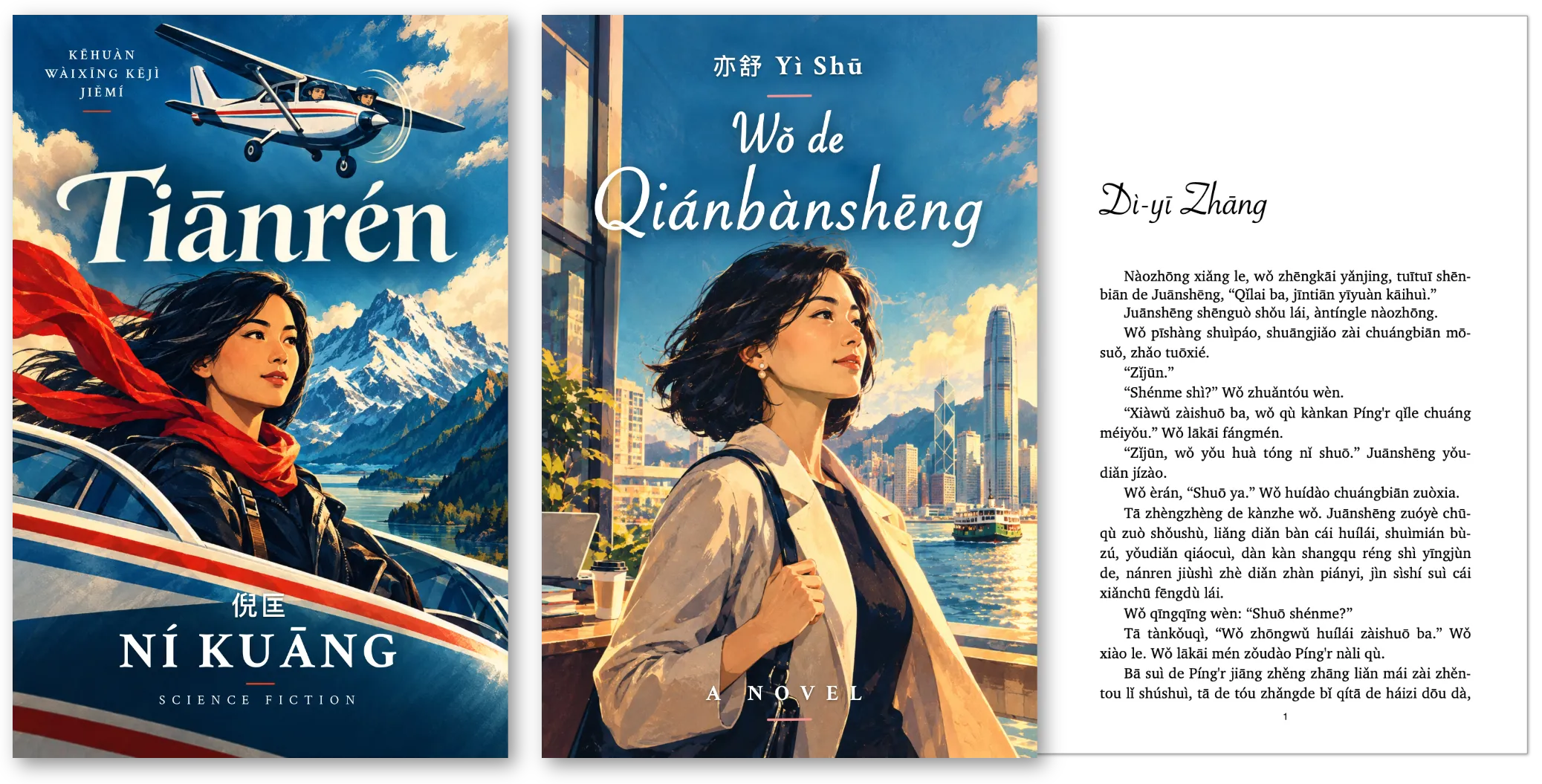
What if… modern Chinese novels could be read entirely in Hànyǔ Pīnyīn, and found in bookstores alongside the world’s great literature?
In this Manifesto:
- A Literature Market Revolution: Imagine picking up a Chinese novel published in 100% pure Hànyǔ Pīnyīn—with zero Chinese characters on any page. Inspired by linguist Yīn Bīnyǒng, we explore a future where standalone alphabetic editions sit on bookstore shelves alongside world literature.
- The Character Drag: Why traditional character-first pedagogy delays authentic reading.
- Letters That Built the World: Historical script transitions from Egyptian hieroglyphs to Vietnamese chữ Quốc ngữ and the Latin alphabet.
- The Pīnyīn Advantage: Treating Hànyǔ Pīnyīn on the basis of the national standard GB/T 15169-2012 as a standalone orthography.
- The Pīnyīn Explorer Toolkit: An overview of the suite—the A-Z Soundboard, the dictionary, the 365 core anchor words, Flashcards and Quiz Module, and the Peekaboo Reader—which unlocks an authentic reading experience step by step.
The Pīnyīn Explorer Method
A Delightful Path for Self-Directed Learners
The Pīnyīn Explorer Method is an original suite of tools and pedagogical concepts built for adults ready to bypass the character barrier and engage directly with modern Mandarin. As with any genuinely new approach, it rewards curiosity and an open mind.
Step right in
Learning a new language like Mandarin should feel like stepping straight onto the field and playing the game.
However, there is a strange hurdle when learning Chinese: with an alphabetic language, you can read words out loud from day one and start using them to communicate. With Chinese, you face a thousand hours of character study before you can read the written language.
This is a serious problem, especially if you see reading for what it is: an indispensable cultural technique that forges true language proficiency by plunging us into meaningful texts, where we naturally absorb vocabulary, structure, culture, and nuance.
Reading is an indispensable cultural technique that forges true language proficiency
Reading is indispensable not merely because it supplies “more input,” but because written language gives us access to an enormous body of linguistic expression that has been deliberately composed, preserved, transmitted, and accumulated across generations.
Just imagine an English speaker who has never read a word of, say, Charles Dickens, Edgar Allan Poe, George Eliot, Arthur Conan Doyle, H. G. Wells, Mark Twain, Ayn Rand, Raymond Carver, or David Sedaris. Such a person may know English perfectly well as a means of everyday communication, yet remain untouched by a vast portion of the language’s accumulated expressive and intellectual resources.
The written word is a bridge across time and space that lets us commune directly with the meticulously refined intellects who poured their utmost clarity, passion, and genius onto the page.
The Mandarin-speaking world, too, has its Dickens, its Poe, its Eliot—literary titans whose psychological depth, satirical bite, and mastery of narrative are no less remarkable.
From giants like 曹雪芹 Cáo Xuěqín, 魯迅 Lǔ Xùn, 張愛玲 Zhāng Àilíng, and 余華 Yú Huá, through popular masters like 倪匡 Ní Kuāng and 亦舒 Yì Shū, to contemporary sensations like 楊雙子 Yáng Shuāng-zǐ, the Chinese-language literary world is vast, vibrant, and remarkably diverse. The barrier is almost entirely linguistic access.
This means that Chinese literature isn’t hidden away from the West because it lacks depth, emotional resonance, or world-class genius. The ideas, the psychological acuity, and the heights of storytelling are all there. The real, first barrier is the immense wall of the Chinese writing system itself.
But even after many months of studying Mandarin, most students will still struggle with basic reading. Consider the following sentence, for example. An HSK 4–5 learner would not be expected to read it comfortably:
Therefore, I suggest skipping the character barrier (at least at first.) Here is the exact same sentence in official Hànyǔ Pīnyīn—after just a few days of focused pronunciation practice, we can read it aloud comfortably (even if we still have to learn the vocabulary):
Concerning homophones, in modern Mandarin, two-syllable Hànyǔ Pīnyīn words are 98.4% unique in everyday vocabulary, with context effortlessly resolving the rest—provided official GB/T 16159-2012 orthography is followed. Read the Empirical Analysis of Pīnyīn Uniqueness →
Traditional methods build their curriculum around mastering 2,500 to 3,500 individual characters. For every character, alongside its meaning you also have to memorize its pronunciation, its components and radicals, and its stroke order.
That baseline alone creates 10,000 to 14,000 individual character-related learning targets. Factor in handwriting and you might be looking at double or triple that (42,000), all required long before you ever get the chance to read real literature or authentic stories.
Every method, app, and textbook claims to have a clever mnemonic system or imaginative story for characters. In practice, it still boils down to brute-force repetition and rote memorization.
And it gets worse when you look at the actual content.
Letters that Built the World
From Hieroglyphs to Global Literacy
We tend to take the alphabet for granted. We see a handful of simple letters on a page and think nothing of them, when in truth they are product of thousands of years of human ingenuity, adaptation, and refinement.
To understand why an alphabetic writing system like Hànyǔ Pīnyīn is such a powerful vehicle for modern Mandarin, it helps to step back and look at the bigger picture—and how we arrived at the letters we use today:
- Egyptian hieroglyphs (c. 3000 BCE): Originated as pictographic writing carved on stone and papyrus.
- Phoenician alphabet (c. 1050 BCE): Transformed Egyptian pictographs into a streamlined, consonant-only writing system.
- Greek alphabet (c. 800 BCE): Modified the Phoenician alphabet by introducing dedicated letters for vowels.
- Etruscan and Old Italic scripts (c. 700 BCE): Tailored the Greek alphabet for the languages of ancient Italy.
- Latin alphabet (c. 600–500 BCE): Derived from the Etruscan script by the Romans to write Latin.
Today, around 300 to 400 languages use the Latin alphabet as their primary script—ranging from Germanic and Romance languages like English, Spanish, and French to distinct language families across the globe, such as Swahili (Bantu), Indonesian (Austronesian), Polish (Slavic), and Hawaiian (Polynesian).
Perhaps the most compelling precedent is Vietnamese: a tonal language that abandoned centuries of character-based scripts (chữ Hán and chữ Nôm) in favor of the Latin alphabet (chữ Quốc ngữ).
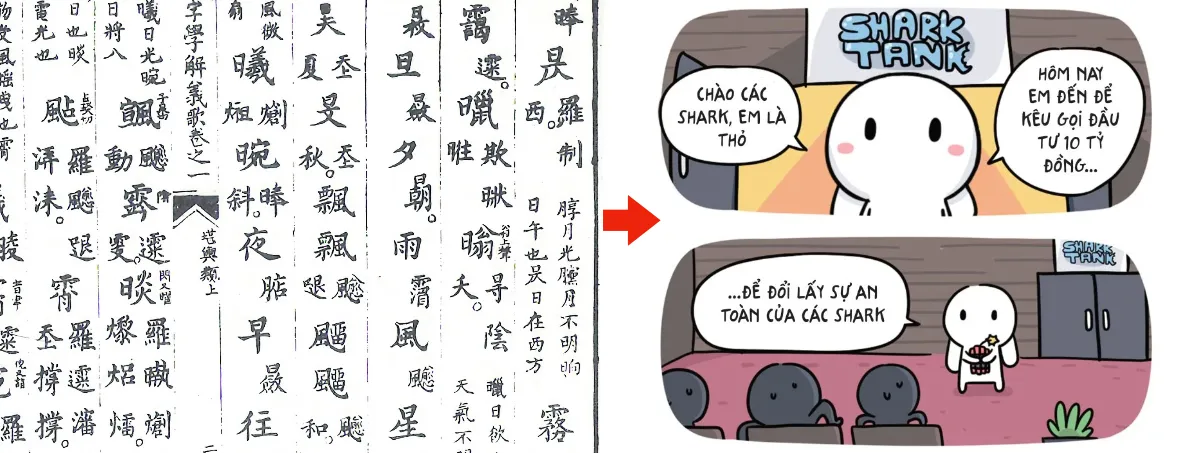
The literacy barrier in Vietnam was monumental: chữ Nôm was a highly complex adaptation of the Chinese writing system. Some characters even fused two Chinese characters into a single, double-decker form. Under this system, literacy was restricted to a tiny elite—under 5% of the population in many areas.
Adopting a Latin orthography changed everything. It sparked an explosive press boom—producing well over a thousand newspapers and journals by the 1930s—and laid the groundwork for the famous 1945 Bình dân học vụ (Mass Education) campaign. By replacing thousands of ultra-complex characters with 29 letters, over 2.5 million people learned to read in the first twelve months alone. In less than a generation, a nation moved from near-total illiteracy to over 90% literacy—and reclaimed its voice on the world stage.
Over the past century alone, dozens of languages have adopted Latin as their primary or supplementary script—including Vietnamese, Malay, Turkish, Somali, Azerbaijani, Turkmen, Uzbek, and Kazakh.
An Official Writing System for Standard Chinese
One of the most remarkable script developments of the modern era was the creation of Hànyǔ Pīnyīn. It is a Latin-based writing system designed to represent modern Standard Chinese (Pǔtōnghuà) as it is spoken today.
Hànyǔ Pīnyīn is far more than a pronunciation aid or a way to input Chinese characters. It follows the Basic Rules of Pīnyīn Orthography (GB/T 16159-2012), the official standard governing how Pīnyīn is written—including word division, capitalization, and punctuation.
Immediate access to the language

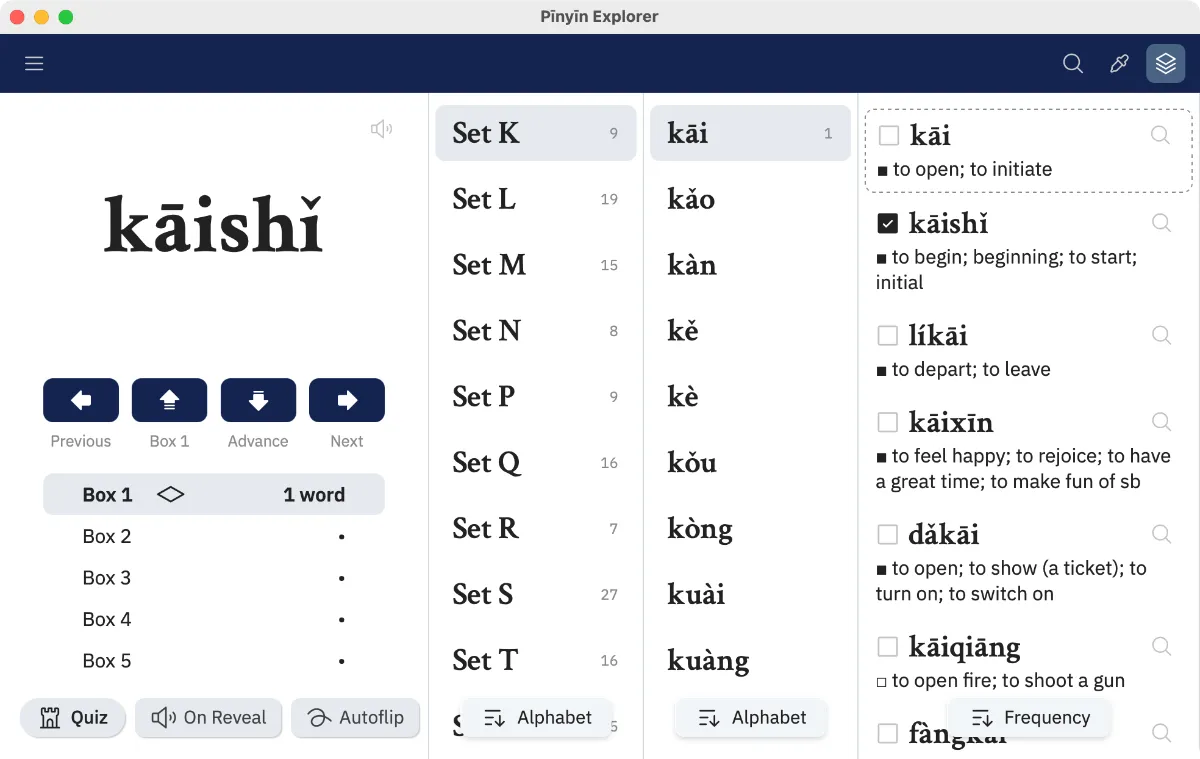
Wāng Miǎo juéde, lái zhǎo tā de zhè sì gè rén shì yī gè qíguài de zǔhé: liǎng míng jǐngchá hé liǎng míng jūnrén, rúguǒ nà liǎng gè jūnrén shì wǔjǐng hái suàn zhèngcháng, dàn zhè shì liǎng míng lùjūn jūnguān.
Wāng Miǎo dì-yī yǎn jiù duì lái zhǎo tā de jǐngchá méiyǒu hǎogǎn. Qíshí nà míng chuān jǐngfú de niánqīngrén hái xíng, jǔzhǐ hěn yǒu lǐmào, dàn nà wèi biànyī jiù ràngrén tǎoyàn le. Zhè rén zhǎngde wǔdà-sāncū, yī liǎn héngròu, chuānzhe jiàn zāngxīxī de píjiā kè, húnshēn yānwèi, shuōhuà cūshēng-dàsǎng, shì zuì lìng Wāng Miǎo fǎngǎn de nà lèi rén.
“Wāng Miǎo?” Nà rén wèn, zhíhūqímíng lìng Wāng Miǎo hěn bù shūfu, kuàngqiě nà rén tóngshí hái zài diǎnyān, tóu dōu bù tái yīxià. Bù děng Wāng Miǎo huídá, tā jiù xiàng pángbiān nà wèi niánqīngrén shìyìle yīxià, hòuzhě xiàng Wāng Miǎo chūshìle jǐngguānzhèng, tā diǎnwán yān hòu jiù zhíjiē xiàng wū lǐ chuǎng.
“Qǐng bù yào zài wǒ jiālǐ chōuyān.” Wāng Miǎo lánzhùle tā.
“Ò, duìbuqǐ, Wāng jiàoshòu. Zhè shì wǒmen Shǐ Qiáng duìzhǎng.” Niánqīng jǐngguān wēixiàozhe shuō, tóngshí duì xìng Shǐ de shǐle gè yǎnsè.
“Chéng, nà jiù zài lóudào lǐ shuō ba.” Shǐ Qiáng shuōzhe, shēnshēn de xīle yī dàkǒu, shǒu zhōng de yān jīhū rán xiàqù yībàn, zhīhòu jìng bùjiàn tǔchū yān lái. “Nǐ wèn.” Tā yòu xiàng niánqīng jǐngguān piānle yīxià tóu.
“Wāng jiàoshòu, wǒmen shì xiǎng liǎojiě yīxià, zuìjìn nǐ yǔ »Kēxué Biānjiè« xuéhuì de chéngyuán yǒuguo jiēchù, shì ba?”
“»Kēxué Biānjiè« shì yī gè zài guójì xuéshùjiè hěn yǒu yǐngxiǎng de xuéshù zǔzhī, chéngyuán dōu shì zhùmíng xuézhě. Zhèyàng yī gè héfǎ de xuéshù zǔzhī, wǒ zěnme jiù bù néng jiēchù le ne?”
“Nǐ kànkàn nǐ zhège rén!” Shǐ Qiáng dàshēng shuō, “Wǒmen shuō tā bù héfǎ le ma? Wǒmen shuō bù ràng nǐ jiēchù le ma?” Tā shuōzhe, gāngcái xījìn dùzi lǐ de yān dōu pēndào Wāng Miǎo liǎn shàng.
“Nà hǎo, zhè shǔyú gèrén yǐnsī, wǒ méi bìyào huídá nǐmen de wèntí.”
“Hái shá dōu chéng yǐnsī le, xiàng nǐ zhèyàng yī gè zhùmíng xuézhě, zǒng gāi duì gōnggòng ānquán fùzé ba.” Shǐ Qiáng bǎ shǒu zhōng de yāntóu rēngdiào, yòu cóng yābiǎnle de yānhé lǐ chōuchū yī gēn.
“Wǒ yǒuquán bù huídá, nǐmen qǐngbiàn ba.” Wāng Miǎo shuōzhe yào zhuǎnshēn huí wū.
“Děngděng!” Shǐ Qiáng lìshēng shuō, tóngshí cháo pángbiān de niánqīng jǐngguān huīle yīxià shǒu, “Gěi tā dìzhǐ hé diànhuà, xiàwǔ qù zǒu yī tàng.”
“Nǐ yào gān shénme!” Wāng Miǎo fènnù de zhìwèn, zhè zhēngchǎo yǐndé línjūmen yě tànchū tóu lái, xiǎng kànkan chūle shénme shì.
“Shǐ duì! Nǐ shuō nǐ—” niánqīng jǐngguān shēngqì de jiāng Shǐ Qiáng lādào yībiān, xiǎnrán tā de cūsú bùzhǐ shì ràng Wāng Miǎo yīrén bù shìyìng.
“Wāng jiàoshòu, qǐng bié wùhuì.” Yī míng shàoxiào jūnguān jímáng shàngqián, “Xiàwǔ yǒu yī gè zhòngyào huìyì, yào qǐng jǐ wèi xuézhě hé zhuānjiā cānjiā, shǒuzhǎng ràng wǒmen lái yāoqǐng nín.”
“Wǒ xiàwǔ hěn máng.”
“Zhè wǒmen qīngchu, shǒuzhǎng yǐjīng xiàng chāodǎo zhōngxīn lǐngdǎo dǎ le zhāohu. Zhè cì huìyì shàng bù néng méiyǒu nín, shízài bù xíng, wǒmen zhǐyǒu bǎ huìyì yánqī děng nín le.”
Shǐ Qiáng hé tā de tóngshì méi zài shuōhuà, zhuǎnshēn xiàlóu le, liǎng wèi jūnguān kànzhe tāmen zǒu yuǎn, sìhū dōu zhǎngchūle yī kǒu qì.
“Zhè rén zěnme zhèyàngr.” Shàoxiào xiǎoshēng duì tóngshì shuō…
What if you could dive straight into the original Chinese of Liu Cixin’s masterpiece, The Three-Body Problem—grappling with the vocabulary, unspooling the grammar, and soaking in the references—without spending five years memorizing characters first? Learning the language and tackling a sci-fi novel like this will be hard enough, even without the characters.
Conventional pedagogy forces adult second-language (L2) learners to wait years until thousands of characters are memorized before touching real books. By treating Hànyǔ Pīnyīn as a standalone, respected orthography from day one, you strip away the character drag and gain immediate access to living literature: sci-fi, romance, web novels, podcast transcripts, wuxia, lifestyle stories—or whatever else you want to sink your teeth into and read.
Some people even find Hànyǔ Pīnyīn a particularly charming use of the Latin alphabet, with its four distinct diacritics giving visual form to the tonal landscape of Mandarin. We simply aren’t accustomed to seeing Chinese written this way—yet.
Question: But what about the homonyms??!
Despite heavy homophony in monosyllables, Hànyǔ Pīnyīn functions with near character-level precision for polysyllabic words.
- Two-syllable words are 98.4% unique among the top 3,000 most frequent items
- For three-syllable words, uniqueness is effectively complete; the remaining non-unique cases reflect orthographic variation rather than genuine lexical ambiguity, arising from variant Chinese character spellings
In practical language use, homophony mainly affects the relatively small set of extremely versatile monosyllabic words such as shì, jí, or yì; but even these are readily resolved by context. For example, in the sentence “Jenny shì Zhōngwén lǎoshī.” any Chinese speaker will naturally interpret shì as the copular verb “to be,” without confusing it with unrelated homophones such as “matter,” “room,” “city,” or “to try.”
However, to guarantee a smooth reading experience, just like with any other alphabetic script, it is crucial that Pīnyīn spelling be accurate (correct spelling of words, word boundaries, no distortion by tone sandhi, etc).
Read the study here: Empirical Analysis of Hànyǔ Pīnyīn Uniqueness in Mandarin Chinese Lexical Items
Question: Where do I get Pīnyīn books and transcripts?
Bring your own, grab them from your favorite podcasts, leverage modern AI tools, copy it over from Google translate, or simply paste Chinese characters directly into the Peekaboo Reader. The built-in engine automatically converts Chinese characters text into natural, readable Pīnyīn sentences following GB/T 16159-2012 orthographic standards.
Under the hood, Peekaboo Reader uses a two-stage conversion engine engineered specifically for standard-compliant Mandarin:
- Word Segmentation (DAG + Viterbi): A custom, dictionary-guided Unigram language model utilizes Directed Acyclic Graphs (DAG) and Viterbi dynamic programming for Maximum Likelihood Word Segmentation, resolving word boundaries with high precision. (pīnyīn-goat 🐐)
- Orthographic Pipeline (GB/T 16159-2012): The segmented output is transformed through an orthographic ruleset—handling polyphones, affix joining and grammatical particles, as well as punctuation to produce natural reading sentences. (OrthoPinyinEngine)
The Pīnyīn Explorer Toolkit
Dedicated Software & Paper Exercises
Every stage of your journey is supported by specialized tools engineered for deep, friction-free learning.
1. Pīnyīn A-Z Soundboard
Speak Mandarin from Day One
The ultimate interactive Pinyin chart—featuring 2,000+ native recordings, pitch visualizers, and surgical filtering options.
When ‘Lexicalised’ mode is toggled on, you aren’t just looking at random theoretical syllables—you’re looking at actual, standalone single-syllable words found in the dictionary.
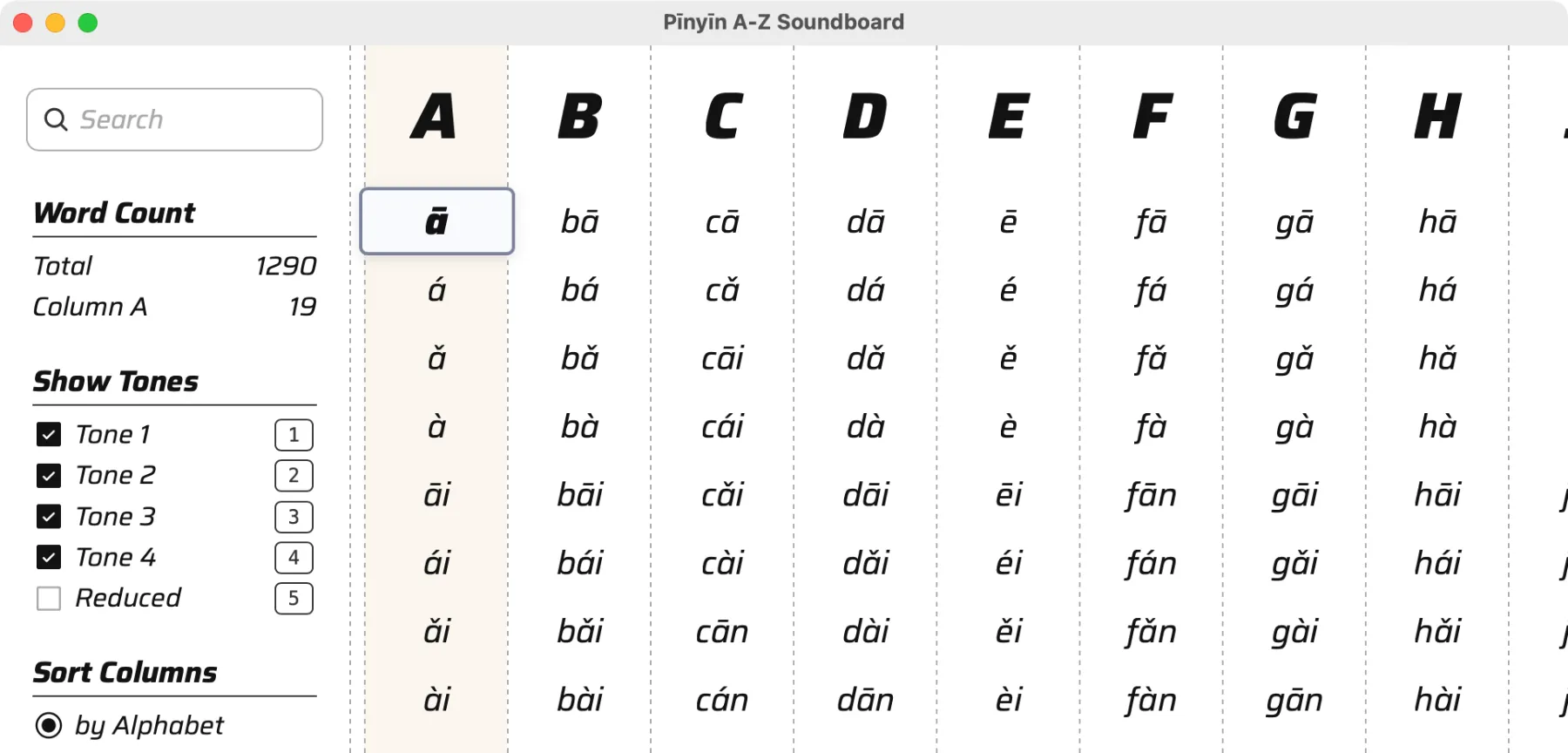
- Complete Dictionary-Backed Inventory: Explore 1,290+ real, standalone single-syllable words (over 2,000 including 5th tone variations) rather than theoretical sound blocks.
- Pitch Visualizer: Real-time fundamental frequency curves clarify true native pitch dynamics beyond rigid textbook diagrams.
- Phonotactic Mastery: Train your intuition to recognize valid syllable structures instantly and catch misspellings in the wild.
- Power Features: First-class keyboard navigation, active recall testing (blur/unblur columns), configurable autoplay loops, and a instant Dual-Notation toggle (Pīnyīn / Bopomofo).

2. Pīnyīn Explorer
Structural Dictionary & Quiz System
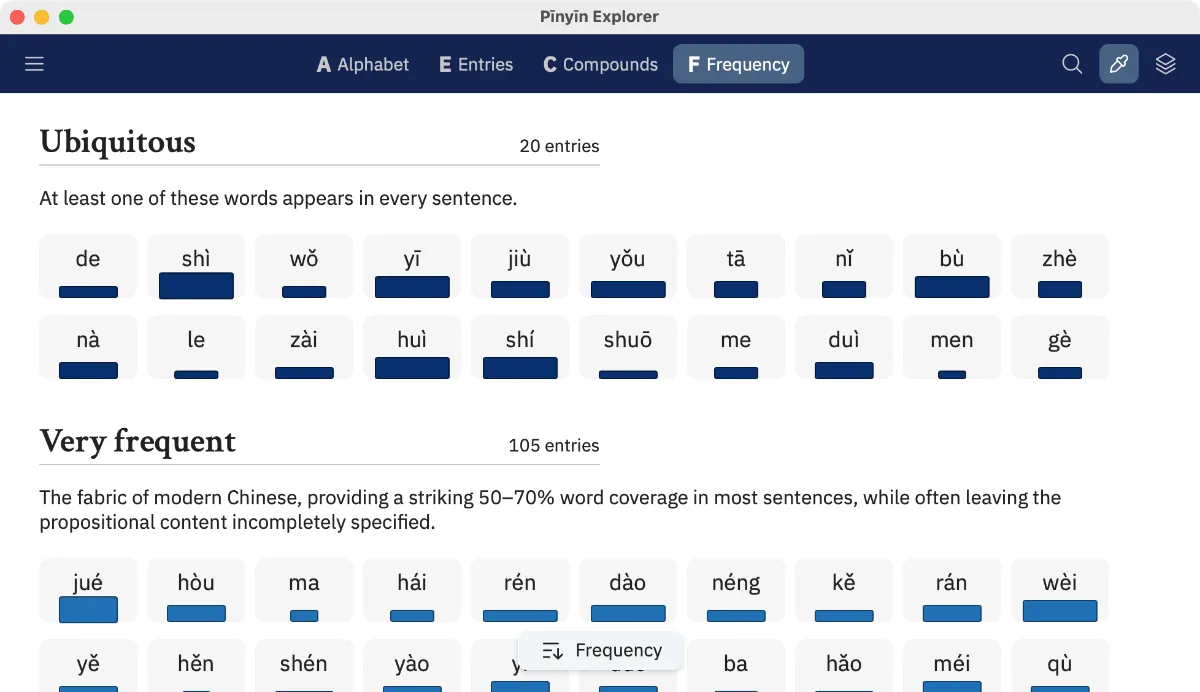
A thoughtfully designed Chinese–English dictionary built specifically to reveal how Mandarin vocabulary connects and branches.

- 114,000+ Lookups & Multi-Column Layout: Replace overwhelming vertical list dumps with clean, cascading syllable tiers that display how base roots expand into compounding networks.
- Adjustable Dictionary Scope: Filter dictionary density by HSK levels (1–9), top 12,000 everyday terms, or top 50,000 extended entries.
- 3D Structural Dimensions: Explore monosyllabic roots by Semantic Density (single-meaning vs. overloaded roots), Productive Compounds (standalone vs. high-building-block roots), and Word Frequency.
- Distraction-Free Leitner Flashcards: A classic 5-box Leitner system as intended in the original design of Sebastian Leitner’s 1972 book ‘So lernt man lernen’—with zero notifications, stats, streaks, or email fluff.
3. Peekaboo Reader
Distraction-Free Masked Reading Environment
Import text in Hànzì or Hànyǔ Pīnyīn from news, podcast transcripts, or translations and transform it into an interactive reading playground.
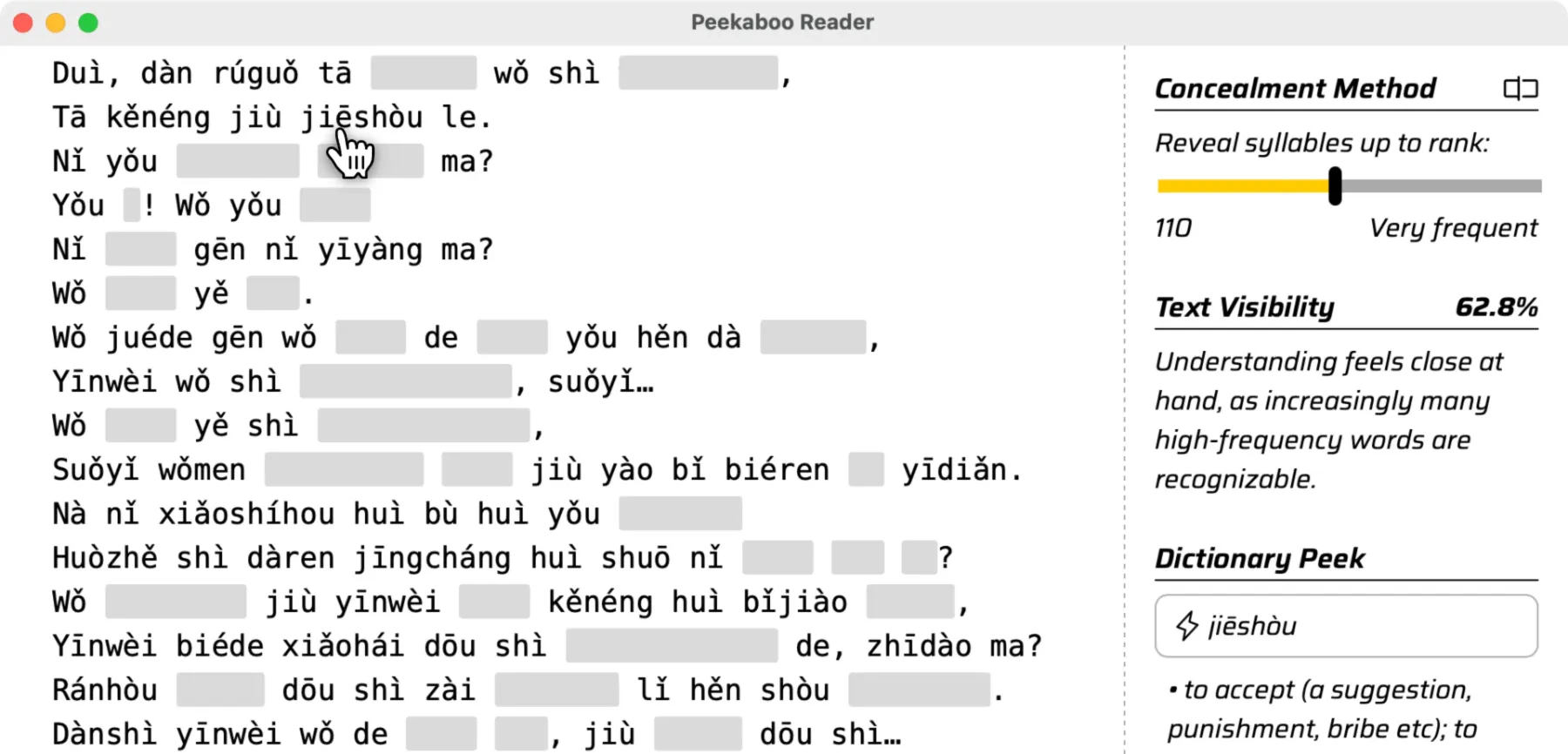
- Smart Pīnyīn Masking: Adjust visibility by word frequency or curated sets. Hide full compounds or individual morphemes, and hover for a quick “peek-a-boo” hint.
- Automatic Orthographic Segmentation: Powered by our dictionary-guided segmentation engine (Pīnyīn-Goat), text written in Chinese characters is automatically converted into natural, readable Pīnyīn sentences following standard orthographic rules (GB/T 16159-2012).
- Deep Interactivity: Hover over words for instant definitions, or click any term to jump straight into deeper exploration inside Pīnyīn Explorer.
4. Semantic Word Mapping
Analogue Pen & Paper Exercise
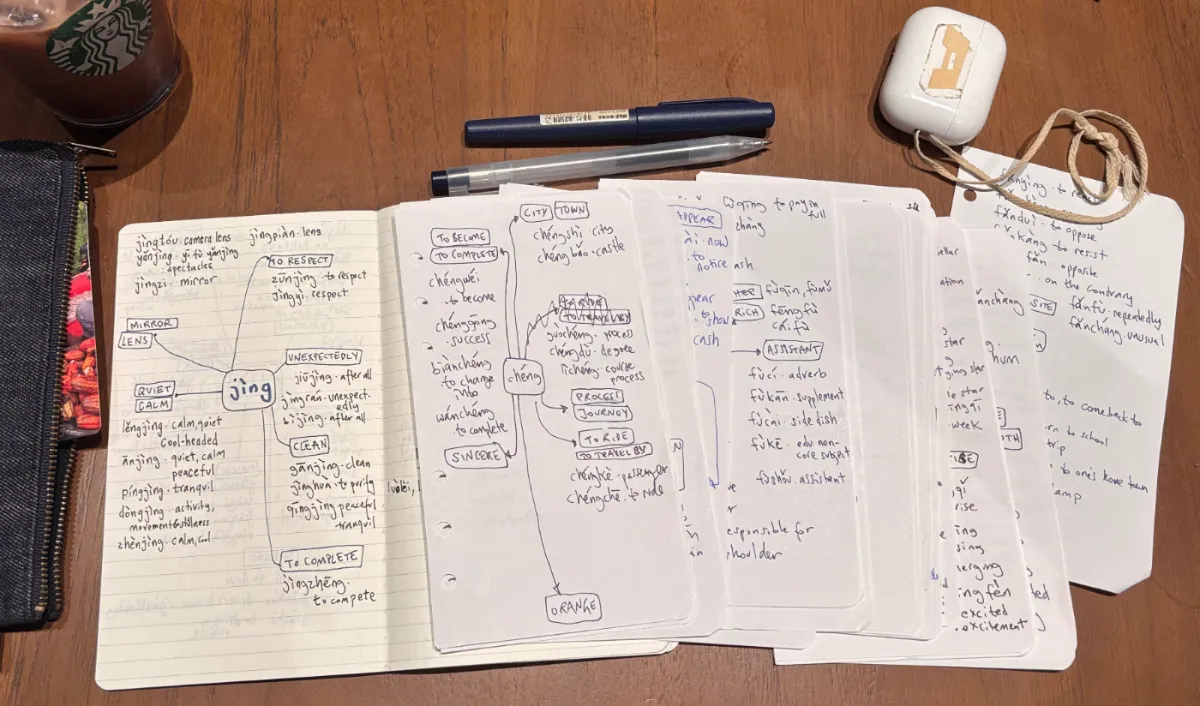
While software handles lookup and flashcard drilling, drawing manual word maps engages spatial memory and creative association.
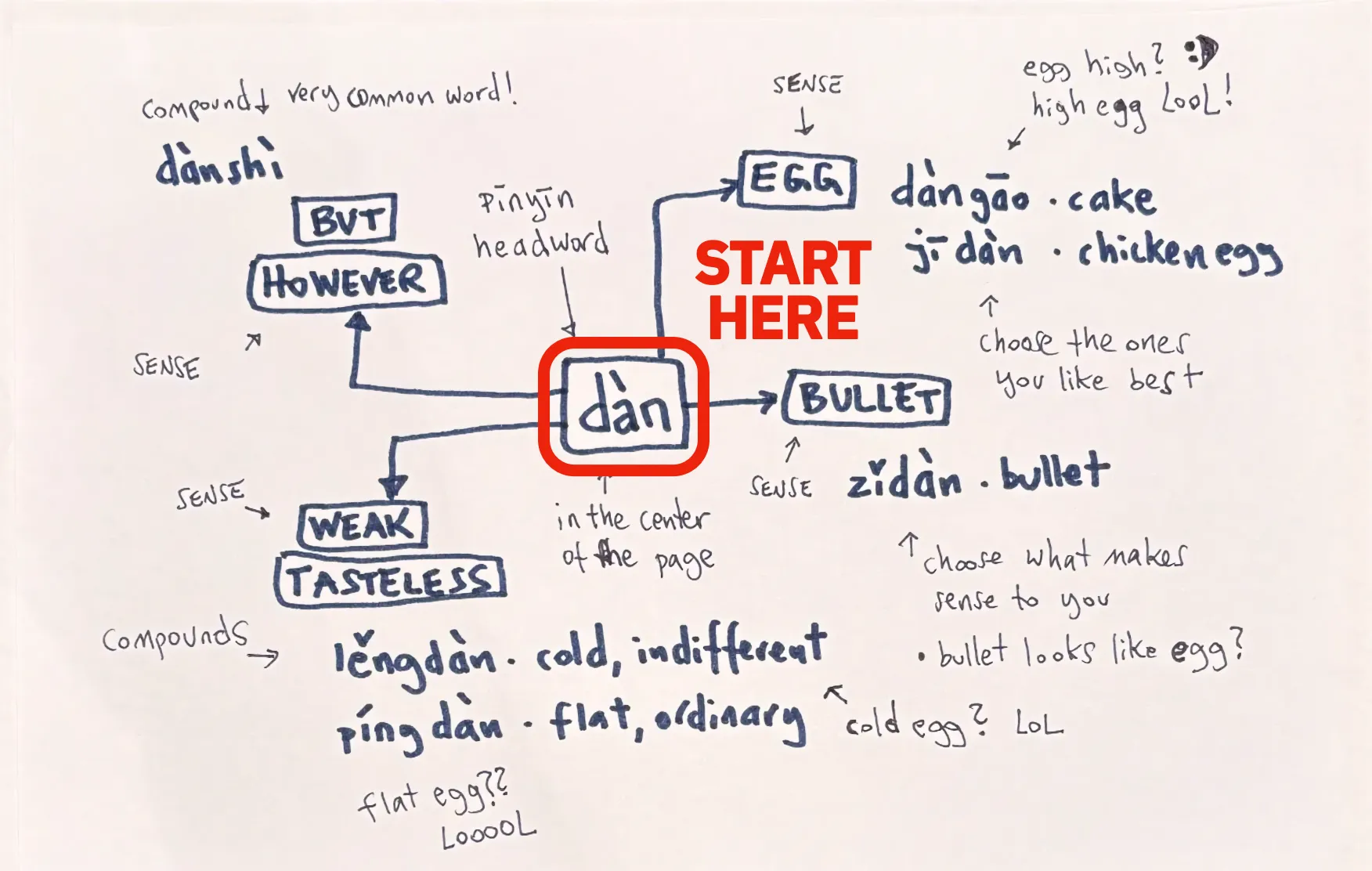
- Anchor the Root: Place a base Pīnyīn root in the center (e.g., dàn).
- Branch Primary Senses: Split the word into core meanings—EGG, BULLET, WEAK, or HOWEVER.
- Attach Compounds: Select compounds from your daily reading or dictionary searches and link them visually (zǐdàn = “child egg” = bullet).
Building 1–2 word maps daily turns isolated vocabulary into an interconnected, permanent personal network.
Start Exploring Today
Download all three apps: Pīnyīn A-Z Soundboard, Pīnyīn Explorer, and Pīnyīn Peekaboo Reader—and take your direct path to fluent Mandarin.