Practice reading Mandarin with excerpts from iconic sci-fi works by Ní Kuāng and Liú Cíxīn in Hànyǔ Pīnyīn, Hanzi, and English.
Curious about reading modern Mandarin in Pīnyīn? Here you’ll find short excerpts from authentic, ungraded literary works and podcasts for reading-aloud practice, whether with a tutor, a study partner, or on your own.
Each sentence is presented in Hànyǔ Pīnyīn, English, and Simplified Chinese, allowing tutors who may not be able to read Pīnyīn to follow along easily.
A science-fiction mystery-adventure, Tiānrén (天人) was published in 1982, when Ní Kuāng’s (倪匡) long-running Wèisīlǐ (衛斯理) series was already well established but still decades from its 2005 finale.
Note from Alfons: I transcribed the entire novel by hand (72.000 words), to practice my Hànyǔ Pīnyīn spelling skills, but due to copyright reasons only a brief excerpt can be shown.
25
1
Nà gè shēnliang gāo ér shòuxuē, kànlai shífēn yánjùn de xíngjǐng, míngzi jiàozuò Tiěnán Qírén.
那个身量高而瘦削,看来十分严峻的刑警,名字叫作铁男奇人。
The tall, gaunt detective, whose stern appearance was quite intimidating, was named Tetsuo Kirin.
2
Yuán Zhènxiá jiǎngle èrshí biàn, “Wǒ líkāi fángjiān dào yùshì qù de shíhou, tā hái shì hǎohǎo de.” Zhìshǎo yǒu shí biàn, shì duì Tiěnán jiǎng de.
原振侠讲了二十遍“我离开房间到浴室去的时候,他还是好好的”,至少有十遍,是对铁男讲的。
Yuan Zhenxia had repeated twenty times, “When I left the room for the bathroom, he was still perfectly fine.” At least ten of those times, he had said it directly to Tetsuo.
In Detective Tetsuo’s shabby office, Yuan Zhenxia repeated it yet again. Thoroughly exasperated, he stood up, then sat down again. “If I may ask, what exactly do you mean by continually questioning me?”
Tetsuo lit a cigarette—and whenever he and Yuan Zhenxia were together, every cigarette Tetsuo lit was followed by Yuan Zhenxia putting out another one for him.
Yuan Zhenxia stared back at Tetsuo. He badly wanted to punch that self-righteous policeman in the face, but instead he calmly said, “I was in the bathroom at the time. When I went in, Inoue was just coming out, and we met in the doorway!”
Tetsuo’s finger moved across the plan. “Inoue encountered you here. If, as soon as you entered the bathroom, you jumped out the window, ran outside to the window of the room, and climbed back in, you could have gotten there ahead of Inoue.
18
Yīnwèi Jǐngshàng shì mànmàn zǒu guòlái de, nàme–”
因为井上是慢慢走过来的,那么──”
Because Inoue was walking over at a leisurely pace, then—”
Yuan Zhenxia picked up the thought. “Then if I attacked Wulang, Inoue would have arrived just in time to hear Wulang call out my name from the doorway!”
Yuan Zhenxia could take no more. His fist shot out suddenly and struck Tetsuo squarely in the face. The blow sent Tetsuo reeling backward; he staggered two steps before finally regaining his balance.
Yuan Zhenxia did not run. Assaulting a police officer was a crime, and once Tetsuo had regained his footing, Yuan Zhenxia held out his hands, ready to be handcuffed.
But Tetsuo wiped the blood from his mouth and began to laugh instead. “Thank you! Yuan, thank you!”
24
Yuán Zhènxiá zhǎzhe yǎn, zhèshí, tā zhēnzhèng mòmíng-qímiào dào le jídiǎn.
原振侠眨着眼,这时,他真正莫名其妙到了极点。
Yuan Zhenxia blinked. At that moment, he was utterly bewildered.
25
Tā zhòngzhòng dǎle duìfāng yī quán, duìfāng fǎndào yīzài xiàng tā dàoxiè, zhè shì zěnme yī huí shì?
他重重打了对方一拳,对方反倒一再向他道谢,这是怎么一回事?
He had just hit the man with all his strength, yet the man was thanking him again and again. What on earth was going on?
倪匡 Ní Kuāng – 蓝血人 Lánxuèrén – The blue blooded man
First serialized in 1964, Lánxuèrén (蓝血人) is a pivotal early entry in Ní Kuāng’s (倪匡) Wèisīlǐ (衛斯理) series, famous for shifting the franchise into science fiction by introducing extraterrestrial life to Hong Kong pulp literature.
29
1
Dàole dì-wǔ tiān, shì yī gè jiàqī.
到了第五天,是一个假期。
By the fifth day, it was a holiday.
2
Wǒ zhīdào zhè yī tiān, huáxuě de rén yīdìng shífēn duō, wǒ biàn bù xiǎng chūqù, dànshì dàole zhōngwǔ, wǒ shízài mēn bùzhù le, yòu dàile huáxuě de gōngjù, zuòzhe diàochē dàole shān shàng, ér wǒ tèdì jiǎnle yī gè shífēn dǒuqiào de shānpō, méiyǒu jīngyàn de rén, shì bù gǎn zài zhèlǐ huá xiàqù de, suǒyǐ zhèlǐ de rén bìngbù duō.
I knew there would be a lot of people skiing that day, so I didn’t want to go out. But by noon I couldn’t stand being cooped up any longer, so I took my ski equipment and rode the chairlift up the mountain. I deliberately chose a very steep slope, where inexperienced skiers wouldn’t dare to ski down, so there weren’t many people there.
3
Nà shì yī gè dàqíngtiān, yángguāng yàomù, rénrén dōu dàishàngle jùxíng de hēiyǎnjìng, wǒ zài nà shānpō shàng huále xiàqù, cái huádào yībàn zhī jì, tūrán tīng de hòumiàn chuánláile yī gè nǚzǐ de jiānjiàoshēng.
It was a brilliantly clear day, the sunlight dazzling, and everyone was wearing enormous dark glasses. I had only made it halfway down the slope when, all at once, I heard a woman’s scream coming from behind me.
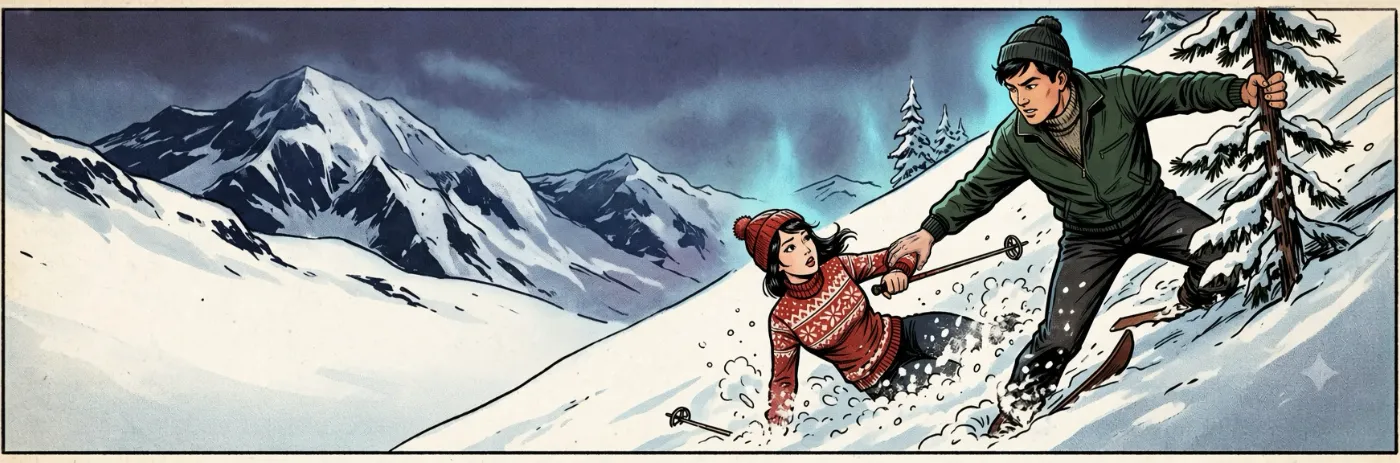
I hurriedly turned to look and saw a girl in a red-and-white sweater, with a matching hat, suddenly lose her balance, pitch to one side, and tumble into the snow.
5
Zhè gè shānpō shífēn dǒuqiào, nà nǚháizi yī diē xiàlai, biàn lìjí yǐ jí gāo de sùdù gǔnle xiàlai.
这个山坡十分陡峭,那女孩子一跌下来,便立即以极高的速度滚了下来。
The slope was extremely steep, and the moment the girl fell, she began rolling down at tremendous speed.
By then, several other people had noticed what was happening, but all they could do was cry out in alarm. Not one of them dared to ski forward.
7
Nà shì kěxiǎng'érzhī de shìqing, yīnwèi nà nǚháizi gǔn xiàlai de shìzi, běnlái yǐ shì shífēn jísù, rúguǒ yǒurén qù lā tā dehuà, yīdìng huì lián nà rén yīqǐ dàizhe gǔn xiàqù de.
It was easy to understand why. The girl was already hurtling downhill at tremendous speed, and anyone who tried to grab her would surely have been dragged down with her.
8
Ér cóng nàyàng de shānpō shàng gǔn xiàqù, zhī shuāiduàn yī tiáo tuǐ, yǐ suàn de shì shàngshàng dàjí de shì le.
而从那样的山坡上滚下去,只摔断一条腿,已算得是上上大吉的事了。
And to go tumbling down a slope like that and come away with only a broken leg would have been considered extraordinarily lucky.
For a split second I stood stunned. Then I immediately jabbed my ski poles into the snow and cut across the slope.
10
Nà nǚháizi bùduàn de jīngjiàozhe, dànshì tā de jiàoshēng, què shíduànshíxù, shēngyīn yǐnmò de shíhou, shì yīnwèi tā zài gǔndòng zhī jì, yǒushí liǎn xiàngxià, kǒu mái zài xuě zhōng, fābuchū shēng lái zhī gù.
The girl kept screaming, but her cries came in fits and starts. Whenever her voice fell silent, it was because she had rolled face-down, her mouth buried in the snow, and could no longer make a sound.
11
Wǒ dǎhéng huáchū, qiàhǎo yíngshàngle tā xiàngxià gǔnlái de shìzi.
我打横滑出,恰好迎上了她向下滚来的势子。
I cut across the slope and came straight into the path of her descent.
I had already spotted a little pine tree growing there, which was why I had cut across in that direction. The moment I reached it, I seized the tree with my left hand, thrust out my ski pole with my right, and shouted, “Grab hold of it!”
13
Nà nǚháizi qiàhǎo zài zhè shíhou gǔnle xiàlai, tā shuāngshǒu yīqí shēnchū, ruòshì chà shàng yī diǎn dehuà, nà wǒ yě wúnéngwéilì le, xìng'ér tā gānghǎo néng zhuāzhù wǒ xuězhàng shàng de xiǎolún, xià gǔn de shìzi lìjí zhǐzhù, nà kē xiǎo sōng, wānle xiàlai, fāchū “gége” zhī shēng, háihǎo méiyǒu duàn.
The girl came tumbling down at that very moment, both hands reaching out. If she had missed by even a little, there would have been nothing I could do. Fortunately, she managed to catch the little wheel on my ski pole, and her downward momentum stopped at once. The little pine bent almost double, creaking under the strain, but thankfully it did not break.
14
Wǒ sōngle yīkǒuqì, yònglì yī lā, jiāng nà nǚháizi lāle shànglái. Huòzhě shì tā de fūsè běnlái jiù jiébái wúlún, yě huòzé shì tā shòu de jīngkǒng guòle dù, tā de miànsè, bái de hé dìshàng de xuě, hé tā shēnshàng de bái yángmáoshān yīyàng.
I breathed a sigh of relief and pulled hard, hauling the girl up. Perhaps her complexion was naturally extraordinarily fair; or perhaps the terror she had just endured had been too much. Her face was as white as the snow beneath us, and as white as the woollen sweater she wore.
By then, people were streaming toward us from every direction. A middle-aged man came hurrying over, calling out, “Fangzi! Fangzi! What happened to you?”
16
Nà rén dàole wǒmen de miànqián, nà nǚháizi… tā de míngzì dāngrán shì jiào Fāngzi le… yǐ zhànle qǐlái, wǒ xiàng nà rén kànqù, xīnzhōng bùjīn qíguài qǐlái.
That person came in front of us, and that girl… her name was of course Fangzi… had already stood up. I looked toward that person, feeling inherently puzzled in my heart.
17
Lái de nà gè rén, zài zhè gè dìqū, shènzhì zhěnggè Rìběn, dōu kěyǐ shuō yǒurén rènshi tā de.
来的那个人,在这个地区,甚至整个日本,都可以说有人认识他的。
The person who arrived was someone you could say was known by people in this region, or even in the whole of Japan.
18
Tā shì Rìběn zuì jù jīngyàn, zuì yǒumíng de huáxuě jiàoliàn, wǒ bùzhǐyīcì de zài tǐyù zázhì shàng kànguo tā de zhàopiàn le.
me他是日本最具经验,最有名的滑雪教练,我不止一次地在体育杂志上看过他的照片了。
He was Japan’s most experienced and famous ski instructor, and I had seen his photos in sports magazines more than once.
19
Ér wǒ lìjí yě wùdào, wǒ jiù de nà nǚháizi Fāngzi, yīdìng biànshì Rìběn bàozhǐ shàng chēngzhīwéi zuì yǒu qiántú de nǚ huáxuě xuǎnshǒu Cǎotián Fāngzi le.
而我立即也悟到,我救的那女孩子芳子,一定便是日本报纸上称之为最有前途的女滑雪选手草田芳子了。
And I immediately realized that Fangzi, the girl I had saved, must be Kusada Fangzi, whom Japanese newspapers praised as the most promising female skier.
20
Cǎotián Fāngzi de huáxuě jìshù, háowúyíwèn de zài wǒ zhī shàng, dànshì tā què huì cóng gāochù gǔn xiàlai, yóu wǒ jiùle tā, ài, zhè dàngzhēn kěyǐ shuō shì guàishì le.
Kusada Fangzi’s skiing technique was undoubtedly superior to mine, yet she managed to roll down from a high place and be saved by me. Ah, this really could be called a strange thing.
Fangzi picked up her skis and turned her head around. Since she was wearing dark glasses like everyone else, I couldn’t see her face clearly at all; I only felt that her complexion was no longer as pale as before.
When I caught hold of her, I had absolutely no intention of expecting her gratitude in return. Naturally, I wouldn’t tell her my real name. Remembering the surname of the innkeeper where I was staying, and thinking that this was my third time coming to Hokkaido, I offhandedly said, “My name is Fujisaburo.”
26
Fāngzi dào: "Nǐ zhù zài…" Kěshì, tā zhè yī jù huà méiyǒu wènwán, biàn yǐjīng bèi tā de jiàoliàn lāle kāiqù.
芳子道:“你住在……”可是,她这一句话没有问完,便已经被她的教练拉了开去。
Fangzi said, “Where do you live…” However, before she could finish asking her question, she was pulled away by her instructor.
27
Tā de jiàoliàn dāngrán shì wèile tā hǎo, yīnwèi yī gè "zuì yǒu xīwàng de huáxuě nǚxuǎnshǒu", hūrán zì shānpō shàng diēle xiàlai, zhè bùnéng-bùshuō shì yī jiàn xiàohua.
Her instructor was of course doing it for her own good, because if the “most promising female ski athlete” suddenly fell down a hillside, it couldn’t be helped but be seen as a joke.
28
Wǒ yě bìngbù duō dānge, yīzhào yuánlái de jìhuà, shùnlì de huádàole shānjiǎo xià.
我也并不多耽搁,依照原来的计划,顺利地滑到了山脚下。
I didn’t delay either, and according to my original plan, smoothly skied down to the foot of the mountain.
29
Ránhòu, tízhe huáxuěbǎn, xiàngqián mànmàn de zǒuqù, wǒ xīnzhōng duì nà jiàn shì, réngrán juéde hěn qíguài, rènwéi Fāngzi bù yīng diē xiàlai de.
然后,提着滑雪板,向前慢慢地走去,我心中对那件事,仍然觉得很奇怪,认为芳子不应跌下来的。
Then, carrying my skis, I walked forward slowly. In my heart, I still felt very strange about that matter, believing that Fangzi shouldn’t have fallen.
Liú Cíxīn – Sān Tǐ – The Three-Body Problem
First serialized in 2006, Sān Tǐ (三体) is Liú Cíxīn’s (刘慈欣) Hugo Award–winning masterpiece. This opening scene introduces nanotech researcher Wāng Miǎo (汪淼) and the abrasive police detective Shǐ Qiáng (史强).
22
1
Wāng Miǎo juéde, lái zhǎo tā de zhè sì gè rén shì yī gè qíguài de zǔhé: liǎng míng jǐngchá hé liǎng míng jūnrén, rúguǒ nà liǎng gè jūnrén shì wǔjǐng hái suàn zhèngcháng, dàn zhè shì liǎng míng lùjūn jūnguān.
Wang Miao found the four people who had come to see him an odd combination: two policemen and two soldiers. Two members of the armed police would have been unremarkable, but these two were army officers.
2
Wāng Miǎo dì-yī yǎn jiù duì lái zhǎo tā de jǐngchá méiyǒu hǎogǎn. Qíshí nà míng chuān jǐngfú de niánqīngrén hái xíng, jǔzhǐ hěn yǒu lǐmào, dàn nà wèi biànyī jiù ràngrén tǎoyàn le.
From the moment he saw them, Wang Miao took an instant dislike to the policemen who had come for him. The young man in uniform was actually all right, and quite polite, but there was something thoroughly unpleasant about the plainclothes officer.
3
Zhè rén zhǎngde wǔdà-sāncū, yī liǎn héngròu, chuānzhe jiàn zāngxīxī de píjiākè, húnshēn yānwèi, shuōhuà cūshēng-dàsǎng, shì zuì lìng Wāng Miǎo fǎngǎn de nà lèi rén.
这人长得五大三粗,一脸横肉,穿着件脏兮兮的皮夹克,浑身烟味,说话粗声大嗓,是最令汪淼反感的那类人。
He was a big, burly man with a face full of hard-set flesh, dressed in a grimy leather jacket and reeking of tobacco. He spoke in a loud, grating voice—the very type of man Wang Miao found most repellent.
“Wang Miao?” the man asked. The fact that he addressed him so bluntly by name made Wang Miao distinctly uncomfortable, especially since the man was lighting a cigarette at the same time without even looking up.
5
Bù děng Wāng Miǎo huídá, tā jiù xiàng pángbiān nà wèi niánqīngrén shìyìle yīxià, hòuzhě xiàng Wāng Miǎo chūshìle jǐngguānzhèng, tā diǎnwán yān hòu jiù zhíjiē xiàng wū lǐ chuǎng.
不等汪淼回答,他就向旁边那位年轻人示意了一下,后者向汪淼出示了警官证,他点完烟后就直接向屋里闯。
Without waiting for an answer, he gestured to the young man beside him. The latter showed Wang Miao his police identification, and once his cigarette was lit, the man simply barged into the apartment.
“Oh, sorry, Professor Wang. This is our Captain Shi Qiang.” The young policeman said it with a smile, while shooting the man named Shi a meaningful glance.
8
“Chéng, nà jiù zài lóudào lǐ shuō ba.” Shǐ Qiáng shuōzhe, shēnshēn de xīle yī dàkǒu, shǒu zhōng de yān jīhū rán xiàqù yībàn, zhīhòu jìng bùjiàn tǔchū yān lái. “Nǐ wèn.” Tā yòu xiàng niánqīng jǐngguān piānle yīxià tóu.
“Fine. We’ll talk in the hallway.” Shi Qiang took a deep drag as he spoke. Nearly half the cigarette burned away, yet he somehow never seemed to breathe the smoke back out. “Go ahead.” He tipped his head toward the young policeman.
“‘Frontiers of Science’ is a highly influential academic organization in the international scholarly community. Its members are all prominent scholars. Why shouldn’t I be in contact with a perfectly legitimate academic organization like that?”
11
“Nǐ kànkàn nǐ zhège rén!” Shǐ Qiáng dàshēng shuō, “Wǒmen shuō tā bù héfǎ le ma? Wǒmen shuō bù ràng nǐ jiēchù le ma?” Tā shuōzhe, gāngcái xījìn dùzi lǐ de yān dōu pēndào Wāng Miǎo liǎn shàng.
“Listen to yourself!” Shi Qiang barked. “Did we say it was illegal? Did we say you weren’t allowed to have contact with them?” As he spoke, all the smoke he’d just sucked into his lungs came billowing into Wang Miao’s face.
12
“Nà hǎo, zhè shǔyú gèrén yǐnsī, wǒ méi bìyào huídá nǐmen de wèntí.”
“那好,这属于个人隐私,我没必要回答你们的问题。”
“Fine. That’s a matter of personal privacy, and I have no obligation to answer your questions.”
“Now everything’s suddenly private, is it? A famous scholar like you ought to have some responsibility for public safety.” Shi Qiang tossed away his cigarette butt and pulled another one from his crushed pack.
“What are you going to do?” Wang Miao demanded furiously. The commotion had drawn the neighbors to their doors, craning their heads out to see what was going on.
17
“Shǐ duì! Nǐ shuō nǐ—” niánqīng jǐngguān shēngqì de jiāng Shǐ Qiáng lādào yībiān, xiǎnrán tā de cūsú bùzhǐ shì ràng Wāng Miǎo yīrén bù shìyìng.
“史队!你说你——”年轻警官生气地将史强拉到一边,显然他的粗俗不止是让汪淼一人不适应。
“Captain Shi! What are you—” The young policeman angrily pulled Shi Qiang aside. Clearly, Wang Miao wasn’t the only one taken aback by his rudeness.
“Professor Wang, please don’t misunderstand.” A major hurried forward. “There’s an important meeting this afternoon, and several scholars and experts have been asked to attend. Our superior sent us to invite you.”
“We know. Our superior has already spoken with the leadership of the Superconducting Center. We really can’t have the meeting without you. If necessary, we’ll simply have to postpone it and wait for you.”
21
Shǐ Qiáng hé tā de tóngshì méi zài shuōhuà, zhuǎnshēn xiàlóu le, liǎng wèi jūnguān kànzhe tāmen zǒu yuǎn, sìhū dōu chángchūle yī kǒu qì.
史强和他的同事没再说话,转身下楼了,两位军官看着他们走远,似乎都长出了一口气。
Shi Qiang and his colleague said nothing more and turned to leave. The two officers watched them disappear down the stairs, both seeming to breathe a long sigh of relief.